
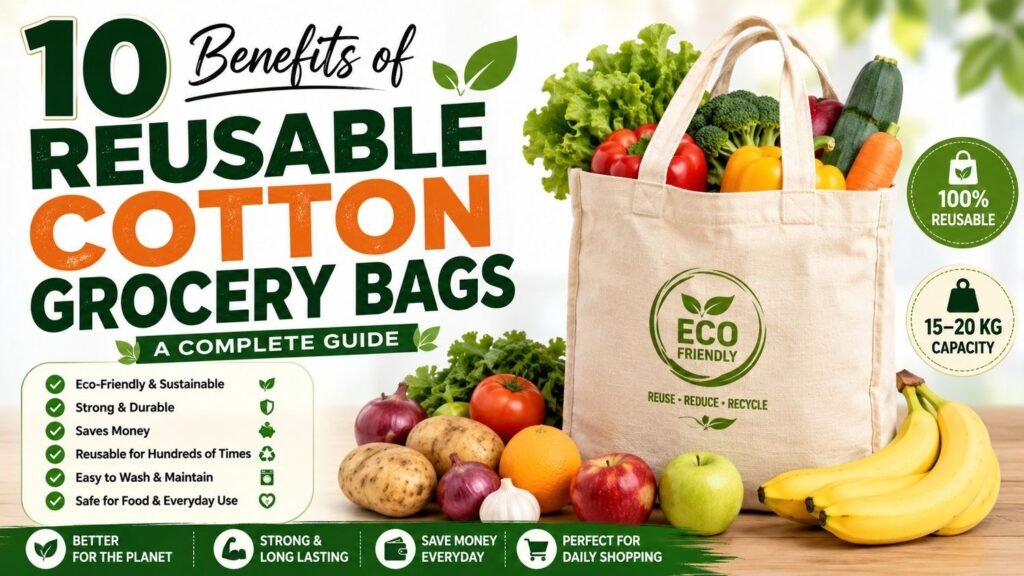
Plastic bags pile up in landfills, oceans, and city drains every single day, and more shoppers are now looking for a better way to carry groceries home. That’s where reusable cotton grocery bags come in. They are sturdy, washable, and made from a natural material that breaks down without harming the planet.
In this guide, you’ll learn what these bags are, why they matter, and the real environmental, health, and economic benefits they offer. You’ll also find a comparison with other bag materials, tips on choosing the right one, and simple care instructions to make your bag last for years. Whether you’re new to sustainable shopping or already committed to a plastic-free lifestyle, this article covers everything you need to know before your next grocery run.
Author Note
I have been using a cloth grocery bag, reusable bag, tote bag, or jhola for many years. Since childhood, these bags have been a part of my daily life. We use different sizes for groceries, vegetables, fruits, medicines, and other household essentials. We also keep a folded cloth bag on our bicycle or motorcycle, so it is always available whenever we need it. From my personal experience, a reusable cloth grocery bag is durable, convenient, eco-friendly, and one of the most useful items every family should own.
What Are Reusable Cotton Grocery Bags?
Reusable cotton grocery bags are shopping bags made from woven or knitted cotton fabric, designed to be used hundreds of times instead of being thrown away after one trip. They typically come with reinforced handles and a flat or gusseted base to hold heavier loads. Unlike single-use plastic, these bags are built specifically for long-term, repeated use.
Definition and Basic Design
A reusable cotton grocery bag is a fabric carrier made primarily from natural cotton fibers, often finished with stitched seams and strong handles. Most designs include a flat bottom so the bag can stand upright when packed. Some versions add inner pockets for smaller items like keys or receipts. The simplicity of the design is part of what makes it so practical for everyday shopping.
Types of Cotton Used
Manufacturers use several cotton varieties, including regular cotton canvas, organic cotton, and recycled cotton blends. Organic cotton is grown without synthetic pesticides, making it a popular choice for eco-conscious brands. Recycled cotton reuses fabric scraps, reducing water and energy consumption during production. Each type affects the bag’s texture, weight, and price point.
How They Differ from Plastic and Synthetic Bags
Cotton bags are woven from natural plant fibers, while plastic bags are made from petroleum-based polymers that take centuries to decompose. Synthetic reusable bags, such as those made from polypropylene, also rely on plastic-derived materials. Cotton stands apart because it is biodegradable, breathable, and free from microplastic shedding. This natural composition is the core reason cotton bags are favored in sustainability discussions.
Common Sizes and Styles
Reusable cotton bags come in various sizes, from small produce pouches to large family-sized totes. Styles range from simple drawstring bags to structured totes with long or short handles. Some brands offer foldable versions that fit into a pocket or purse for convenience. Choosing the right size depends on how much you typically buy in a single shopping trip.
Why Reusable Cotton Grocery Bags Matter Today
Plastic waste has become a global crisis, and everyday choices like grocery bags play a bigger role than many people realize. Cotton bags offer a practical response to this growing problem. Understanding why they matter helps explain their rising popularity across households and retailers alike.
The Global Plastic Waste Problem
Millions of tons of plastic bags are produced and discarded every year, with a large share ending up in oceans, rivers, and landfills. These bags often break into smaller microplastic particles that contaminate soil and water sources. Wildlife frequently mistakes plastic debris for food, leading to serious ecological harm. This ongoing crisis has pushed both consumers and industries to search for durable alternatives.
Rising Consumer Awareness
Shoppers today are more informed about the environmental cost of their purchases than ever before. Social media, documentaries, and news coverage have highlighted the damage caused by single-use plastics. As awareness grows, more people are actively choosing reusable options like cotton bags. This shift in mindset is reshaping how retailers package and promote their products.
Government Bans and Regulations
Many countries and cities have introduced bans or fees on single-use plastic bags to curb pollution. These policies encourage consumers to switch to reusable alternatives, including cotton totes. Retailers often respond by stocking branded cotton bags at checkout counters. Regulatory pressure has become one of the strongest drivers behind the reusable bag movement.
Retailer Adoption Trends
Supermarkets and boutique stores increasingly offer cotton tote bags as part of their branding and sustainability efforts. Some retailers even print their logo on cotton bags, turning them into a marketing tool. This trend reflects a broader shift toward eco-friendly packaging across the retail industry. Customers benefit from convenient access to reusable options right at the point of purchase.
Shift Toward Sustainable Shopping
Sustainable shopping habits extend beyond bags to include reusable containers, refill stations, and minimal packaging. Cotton grocery bags fit naturally into this lifestyle, acting as an easy entry point for beginners. As more people adopt these habits, demand for durable, natural materials continues to rise. This cultural shift shows no signs of slowing down.
Top Environmental Benefits of Cotton Grocery Bags
Cotton Grocery Bags offer some of the strongest environmental advantages among reusable shopping options. From reducing pollution to supporting better farming practices, their impact goes well beyond the checkout counter. This section covers the core environmental reasons people are switching to cotton.
Reduces Plastic Pollution
Every cotton bag used in place of plastic prevents dozens, sometimes hundreds, of single-use bags from entering the waste stream over its lifetime. Since cotton bags are designed for repeated use, they directly cut down on the demand for new plastic production. Less plastic in circulation means less waste ending up in oceans and landfills. This single benefit is often the main reason shoppers make the switch.
Biodegradable and Compostable Material
Cotton is a natural fiber that decomposes within months under proper composting conditions, unlike plastic, which can persist for hundreds of years. When a cotton bag finally wears out, it can break down without leaving toxic residue behind. This makes disposal far less harmful to soil and water systems. Composting old cotton bags is even possible in home compost setups.
Lowers Carbon Footprint Over Time
While cotton production does require resources, the carbon footprint per use drops significantly when a bag is reused hundreds of times. Studies on lifecycle emissions show that reusable bags become more efficient than single-use plastic after just a few dozen uses. Long-term ownership is key to maximizing this environmental benefit. The more a bag is reused, the smaller its per-trip carbon impact becomes.
Supports Sustainable Farming Practices
Many cotton bag manufacturers now source organic or fair-trade cotton, which is grown using fewer harmful chemicals. This supports farming methods that protect soil health and reduce water contamination. Choosing bags made from responsibly sourced cotton extends the environmental benefit beyond the bag itself. It also supports farming communities that follow ethical labor practices.
Minimizes Landfill Waste
Because cotton bags last for years rather than minutes, they significantly reduce the volume of waste sent to landfills. A single durable tote can replace thousands of plastic bags over its usable life. Less landfill waste also means reduced methane emissions associated with decomposing plastic. This long-term reduction in waste is a major reason environmental groups recommend cotton alternatives.
Health and Safety Benefits
Beyond environmental impact, cotton grocery bags offer real advantages for personal health and food safety. Their natural composition and easy maintenance make them a safer choice for everyday use. This section explains how cotton bags compare favorably in terms of hygiene and chemical exposure.
Chemical-Free Material
Cotton bags are generally free from the industrial chemicals used in plastic production, such as phthalates and BPA. This makes them a safer option for families concerned about chemical exposure in daily household items. Natural fibers avoid the off-gassing sometimes associated with synthetic plastics. Choosing cotton reduces unnecessary contact with these substances.
Safer for Food Contact
Because cotton bags don’t degrade into plastic residue, they are considered safer for carrying fresh produce, bread, and other food items. Plastic bags can sometimes transfer trace chemicals to food, especially under heat or prolonged contact. Cotton’s breathable nature also helps prevent condensation buildup that can promote bacterial growth. This makes cotton bags a more food-safe choice overall.
Reduces Microplastic Exposure
Synthetic bags can shed tiny microplastic fibers over time, which may end up in food or the environment. Cotton, being a natural fiber, does not contribute to this type of pollution. Reducing microplastic exposure is increasingly important as research links these particles to potential health concerns. Cotton bags offer a simple way to lower this risk in daily life.
Easy to Sanitize and Wash
Most cotton grocery bags can be machine washed or hand washed with regular detergent, making hygiene maintenance simple. Regular washing removes food residue, bacteria, and odors that can accumulate from raw produce or meat packaging. This ease of cleaning is a major advantage over non-washable plastic or paper alternatives. Keeping a cotton bag clean only takes a few minutes each week.
Economic and Practical Benefits
Cotton grocery bags aren’t just good for the planet and your health — they also make financial and practical sense. From saving money over time to offering everyday versatility, these bags provide real value for the price. This section breaks down the economic side of switching to cotton.
Long-Term Cost Savings
Although a cotton bag costs more upfront than a plastic one, its extended lifespan means significant savings over time. Shoppers who reuse the same bag for groceries avoid repeatedly paying for disposable bags where fees apply. Over a year, this small daily saving can add up to a noticeable amount. The investment pays for itself well before the bag wears out.
Durability and Strength
Cotton fabric can hold considerably more weight than thin plastic film without tearing or splitting. This strength makes cotton bags ideal for carrying heavier grocery items like canned goods, bottles, or produce. Reinforced stitching on handles further improves their ability to carry loads safely. A well-made cotton bag can last for several years of regular use.
Avoiding Plastic Bag Fees
Many regions now charge a small fee for each plastic bag used at checkout, which adds up over frequent shopping trips. Bringing a reusable cotton bag eliminates this recurring cost entirely. Some stores even offer small discounts to customers who bring their own bags. These incentives make cotton bags an economically smart choice.
Versatility Beyond Grocery Shopping
Cotton bags aren’t limited to grocery runs; they work well for beach trips, gym gear, books, or general storage. Their sturdy build and simple design make them useful in many everyday situations. This versatility increases the overall value gained from a single purchase. One bag can serve multiple purposes across different parts of daily life.
Easy Storage and Portability
Many cotton bags fold down into a compact size, making them easy to store in a car, purse, or kitchen drawer. This portability means shoppers are more likely to remember bringing one along. Lightweight folding designs don’t add noticeable bulk to a bag or backpack. Convenient storage encourages consistent, long-term use.
How to Choose the Best Reusable Cotton Grocery Bag
Not all Cotton Grocery Bags are made equally, and choosing the right one affects how long it lasts and how well it performs. Paying attention to a few key factors can help shoppers avoid low-quality options. This section outlines what to look for before buying.
Fabric Weight and Quality
Heavier cotton canvas, often measured in ounces per square yard, tends to be more durable than thin, lightweight fabric. A denser weave resists tearing and holds its shape better after repeated washing. Checking the fabric weight before purchase helps ensure the bag will withstand regular grocery loads. Higher-quality fabric is usually worth the slightly higher price.
Stitching and Handle Strength
Reinforced double stitching, especially around the handles and base, prevents the bag from ripping under weight. Handles should be wide and securely attached rather than thin or loosely sewn. Weak stitching is one of the most common reasons reusable bags fail early. Inspecting seams before buying can save money in the long run.
Size and Capacity
Choosing the right size depends on typical shopping habits, whether it’s a quick top-up or a full weekly grocery haul. Larger bags with gusseted sides can hold more items without straining the seams. Smaller bags work well for produce or bakery items that don’t need much space. Matching bag size to shopping needs improves everyday convenience.
Price vs Value Considerations
While budget cotton bags are widely available, slightly higher-priced options often offer better fabric and construction. It helps to compare cost against expected lifespan rather than upfront price alone. A slightly more expensive bag that lasts five years offers better value than a cheap one replaced every few months. Balancing price and durability leads to smarter purchasing decisions.
Cotton Bags vs Other Reusable Bag Materials
Cotton isn’t the only reusable bag option available, and comparing it with alternatives helps clarify why many shoppers still prefer it. Each material has distinct strengths and trade-offs. This comparison table and section break down the key differences.
| Material | Durability | Biodegradable | Cost | Best For |
|---|---|---|---|---|
| Cotton | High | Yes | Medium | Everyday grocery shopping |
| Polyester | High | No | Low-Medium | Lightweight, foldable use |
| Jute | Medium-High | Yes | Medium | Rustic, heavy-duty carrying |
| Non-woven Polypropylene | Medium | No | Low | Budget-friendly retail bags |
| Paper | Low | Yes | Low | One-time or light use |
Cotton vs Polyester Bags
Polyester bags are lightweight and often cheaper, but they are made from synthetic plastic fibers that don’t biodegrade. Cotton, in contrast, offers a natural composting option once the bag reaches the end of its life. Polyester may resist water slightly better, but cotton generally feels more comfortable to carry. For shoppers focused on sustainability, cotton remains the stronger choice.
Cotton vs Jute Bags
Jute bags share cotton’s biodegradable advantage and are known for a rustic, textured appearance. However, jute fibers can be coarser and less flexible than woven cotton fabric. Cotton bags tend to be softer, more machine-washable, and better suited for frequent everyday use. Jute works well for heavier, occasional use rather than daily shopping.
Cotton vs Non-Woven Polypropylene Bags
Non-woven polypropylene bags are common at supermarket checkouts due to their low production cost. Despite looking fabric-like, they are made from plastic and do not biodegrade naturally. Cotton bags last longer with proper care and avoid the microplastic concerns tied to polypropylene. This makes cotton a more environmentally sound long-term investment.
Cotton vs Paper Bags
Paper bags are biodegradable but tend to tear easily, especially when wet or overloaded. Cotton bags offer far greater durability and can be reused hundreds of times, unlike paper, which often only survives one or two uses. While paper may seem eco-friendly, its short lifespan reduces its overall environmental efficiency. Cotton provides a more practical reusable alternative.
Which Option Is Truly Best?
When comparing durability, biodegradability, and everyday practicality together, cotton consistently ranks among the top choices. It balances environmental benefits with the strength needed for regular grocery use. Other materials may excel in one category but often fall short in another. For most households, cotton offers the most well-rounded combination of benefits.
Care Tips to Make Your Cotton Grocery Bags Last Longer
Proper care significantly extends the lifespan of a reusable Cotton Grocery Bags, maximizing its value and environmental benefit. Simple maintenance habits can prevent premature wear and keep bags looking fresh. This section covers practical care tips every owner should know.
Proper Washing Methods
Most cotton bags can be machine washed in cold or lukewarm water using a gentle cycle to avoid fabric damage. Turning the bag inside out before washing helps protect any printed designs or logos. Avoid harsh bleach, as it can weaken cotton fibers over time. Washing every few weeks, or after carrying raw food items, keeps the bag hygienic.
Drying and Storage Tips
Air drying is generally better for cotton bags than high-heat tumble drying, which can cause shrinkage. Hanging the bag or laying it flat helps it retain its original shape. Storing bags in a dry area prevents mold or musty odors from developing. Proper storage also keeps handles from stretching out of shape.
Repairing Minor Damage
Small tears or loose stitching can often be repaired at home with a needle and thread, extending the bag’s usable life. Reinforcing handle seams before they fully tear out prevents bigger repairs later. Simple patches can also be added to worn areas of fabric. Regular inspection helps catch minor damage before it becomes a bigger problem.
When to Replace Your Bag
A cotton bag should be replaced when the fabric becomes thin, handles are beyond repair, or stains no longer wash out. Continuing to use a heavily worn bag risks it tearing while loaded with groceries. Recycling or composting an old cotton bag is a responsible way to dispose of it. Replacing bags only when truly necessary keeps the environmental benefit intact.
Pros and Cons of Reusable Cotton Grocery Bags
| Pros | Cons |
|---|---|
| Biodegradable and compostable | Higher upfront cost than plastic |
| Strong and durable for heavy loads | Requires regular washing |
| Machine washable and easy to maintain | Takes longer to dry than synthetic fabric |
| Reduces long-term plastic waste | Slightly bulkier when wet |
| Versatile for many uses beyond groceries | Organic cotton options can be pricier |
Conclusion
Reusable cotton grocery bags offer a practical, affordable, and environmentally responsible alternative to single-use plastic. From reducing pollution and supporting sustainable farming to saving money and improving food safety, the benefits reach far beyond the checkout counter. With proper care, a single cotton bag can replace hundreds of plastic bags over its lifetime, making it a small change with a meaningful impact. If you haven’t already made the switch, consider picking up a durable cotton tote for your next shopping trip — your wallet and the planet will both benefit.
Frequently Asked Questions – Cotton Grocery Bags
1. Are reusable cotton grocery bags really better than plastic bags?
Yes, cotton bags are biodegradable, reusable hundreds of times, and free from the chemicals found in plastic. While plastic bags are cheaper upfront, they contribute heavily to pollution. Over time, cotton bags reduce far more waste per use. This makes them a stronger long-term environmental choice.
2. How many times do I need to reuse a cotton bag to offset its production impact?
Studies suggest cotton bags need to be reused between 50 and 150 times to match the lower initial carbon footprint of plastic. Since cotton bags are designed for years of use, this threshold is easily met. Regular daily or weekly use makes the environmental payoff achievable within months. Organic cotton may require slightly more uses due to production differences.
3. Can reusable cotton bags be washed in a washing machine?
Most cotton grocery bags are machine washable on a gentle, cold-water cycle. It’s best to check the care label first, as some printed designs may require hand washing. Air drying is recommended to prevent shrinkage. Regular washing keeps the bag hygienic for food use.
4. Are cotton bags safe for carrying raw meat or fish?
Cotton bags can carry raw meat or fish, but it’s best to use a separate bag or liner for these items. Washing the bag immediately afterward prevents bacterial buildup. Many shoppers keep a dedicated bag just for raw food items. This simple habit keeps other groceries safe from cross-contamination.
5. Do cotton grocery bags shrink after washing?
Cotton can shrink slightly, especially with hot water or high-heat drying. Washing in cold water and air drying helps minimize shrinkage. Pre-shrunk cotton bags are less likely to change size significantly. Checking the product label for care instructions helps preserve the original fit.
6. How long do reusable cotton bags typically last?
With proper care, a good-quality cotton grocery bag can last anywhere from two to five years or longer. Lifespan depends on fabric quality, frequency of use, and how well it’s maintained. Reinforced stitching and heavier fabric tend to last longer. Regular washing and gentle handling also extend durability.
7. Are organic cotton bags worth the extra cost?
Organic cotton bags are grown without synthetic pesticides, offering additional environmental benefits beyond standard cotton. They often cost more due to farming practices and certification processes. For shoppers focused on sustainability, the extra cost is generally considered worthwhile. The bag still performs the same practical function as regular cotton.
8. Can I compost a worn-out cotton grocery bag?
Plain, undyed cotton bags can typically be composted at home or through industrial composting facilities. Bags with plastic-based prints or synthetic thread may not compost as easily. Checking the fabric composition helps determine the best disposal method. Composting is a responsible way to dispose of a bag at the end of its life.
9. Do cotton bags hold as much weight as plastic bags?
Cotton bags generally hold more weight than thin plastic bags without tearing, especially with reinforced stitching. Heavier canvas cotton is particularly strong for carrying cans, bottles, and produce. Weak stitching, rather than the fabric itself, is usually the limiting factor. Choosing a well-made bag ensures reliable weight capacity.
10. Are reusable cotton bags better than non-woven polypropylene bags?
Cotton bags are more environmentally friendly since they are biodegradable, unlike polypropylene, which is plastic-based. Polypropylene bags are often cheaper and lighter but don’t offer the same natural decomposition benefits. For shoppers prioritizing sustainability, cotton remains the preferred material. Polypropylene may still appeal to those seeking a lower upfront cost.
11. Where can I buy good-quality reusable cotton grocery bags?
Reusable cotton bags are available at supermarkets, eco-friendly retailers, and online marketplaces. Specialty sustainability brands often offer higher-quality organic cotton options. Checking fabric weight and stitching quality before purchase helps ensure durability. Reading customer reviews can also reveal how well a bag performs over time.
12. Do cotton bags smell after carrying groceries?
Cotton bags can develop odors if not washed regularly, especially after carrying produce or raw food. Machine washing with mild detergent typically removes any lingering smell. Airing the bag out after each use also helps prevent odor buildup. Consistent care keeps the bag smelling fresh for repeated use.